After decades of de-listings, this month we saw a new listing on the JSE.
The shrinking JSE
In the 1990s, there had been approximately 850 listings to invest in. 10 years ago, in 2015, that number had declined to 392. 2024 saw 12 de-listings, with only 8 new listings, resulting in a total of 280 listed shares at year end (South African Reserve Bank).
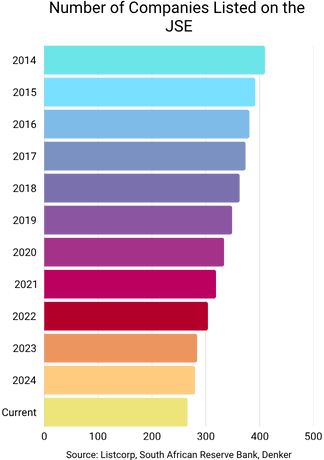
De-listings have created concern over the past number of years. With fewer new listings, the concentration of liquidity on the JSE is exacerbated. As investment managers, choices are few and diversification opportunities limited. As a result, domestic portfolios are more concentrated in fewer shares. A healthy listings pipeline is important for market vibrancy. The fact that new listings still lag de-listings is a structural headwind for the JSE. The exchange is attempting to encourage new listings through simplifying listing requirements and enhancing its offering.
With the mound of de-listings, it is obvious why there was such a buzz around a new listing announcement which did not stem from a corporate unbundling.
Optasia
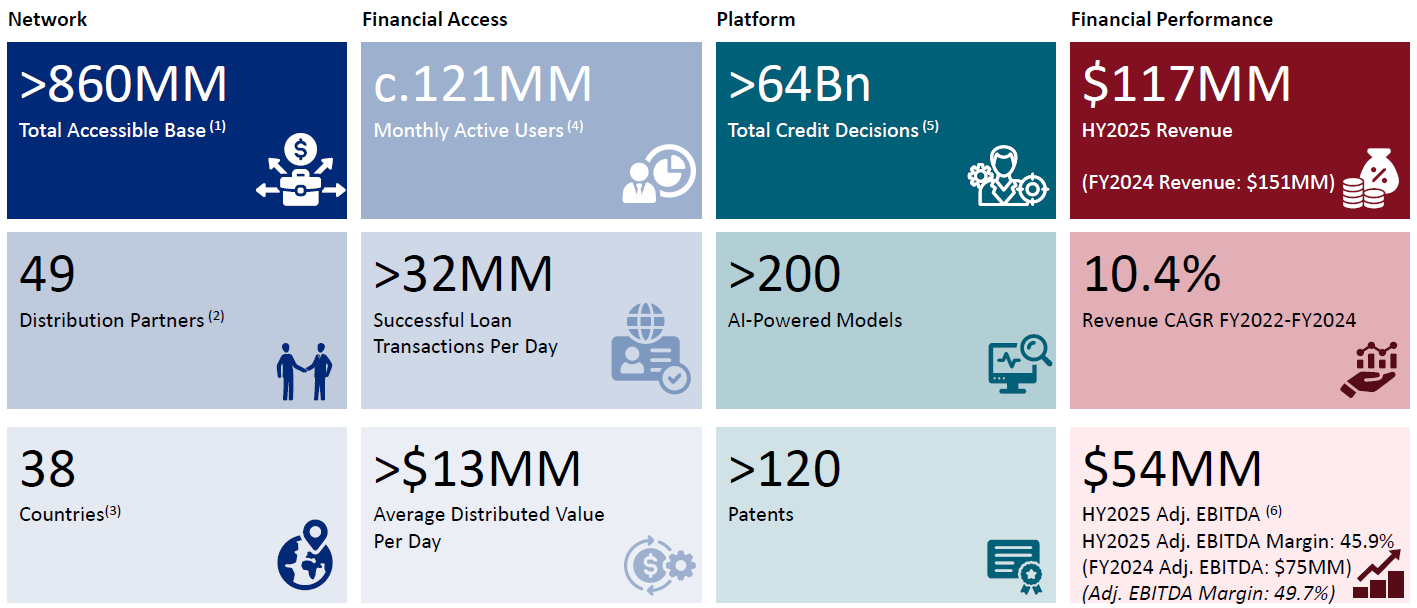
Optasia is a Dubai-based fintech platform focused on AI-powered micro-finance, mobile credit provider operating in emerging markets. They focus on the “unbanked” population across Africa, the Middle East and Asia. They have collaborated with 13 financial institutions and 49 distribution partners, and operate across 38 countries. As at June 2025, Optasia served over 120 million monthly active users and processed more than 30 million transactions daily.
Source: Optasia Roadshow Presentation
Optasia makes use of mobile network operators, mobile wallet platforms and financial institutions to serve their end clients. They focus on the “underbanked” population in emerging markets – the subset of the population who do not make use of traditional banking and would otherwise find difficulty in obtaining credit. Through their AI powered decision engine, they evaluate customers to determine their ability and likelihood of paying back micro-loans. Their model creates features for each individual. The model collects over 5,000 data points per person and converts these into more than 100,000 features. These features assist in the simulation of a particular person’s behaviour and allows Optasia to predict the potential of the applicant to take on credit and repay the loan. The predictability of the model is extremely important as they do not ask for collateral or warranty, they simply provide the credit. Any defaults need to be absorbed by the company themselves – they bear the credit risk. The model constantly calculates these features to learn and improve its output and Optasia’s default rate has been very low to date (1.14% as of June 2025). The model has additionally proven to be able to detect fraud through strange or irregular habits.
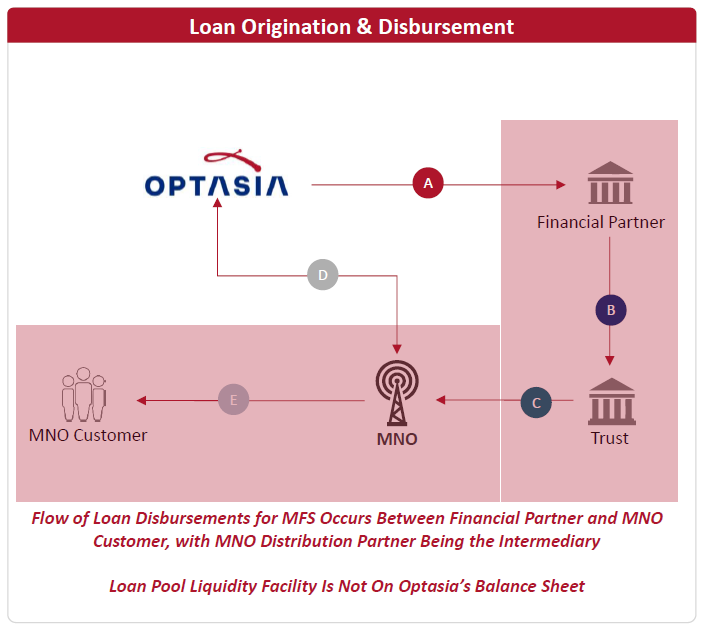
In a nutshell, an “underbanked” customer applies for credit through an existing platform (Optasia’s distribution partner, eg: mobile network or mobile wallet operator); Optasia’s model analyses the individual using the data provided by the distribution partner and either approves or denies the request; in the case of an approval, funds flow directly to the client’s mobile wallet or bank account (from Optasia’s financial institution partner). The process takes approximately 30 seconds to complete. Funds, plus interest, need to be repaid within a short time frame.
Source: Optasia Roadshow Presentation
The cost of debt is relatively high, given the term and nature of the loan. These loans are relatively small in nature, providing applicants with short-term cashflow requirements. The loan size remains manageable and is serviceable. Optasia outlines that the majority of these loans are applied for by individuals trying to service education expenses and small business owners needing to meet working capital requirements. They rely on the extension of credit and repaying the debt ensures they keep in “good standing” and are able to access capital again at a later date. In the company’s experience, people usually repay these loans timeously. In the instance where they do not meet the deadline, the period is extended once. Failure to repay after the extension results in the amount being written off in Optasia’s books. Although they do not have any recourse for retrieving losses on unpaid amounts, customers are incentivised to pay back loans as they do not have access to other forms of credit and failure to repay would result in them not being able to use the service in future. Optasia additionally allocates resources towards educating populations in the areas in which they operate to enhance their understanding of the service and ensures initial loans to applicants are relatively small to reduce the risk of defaults. Over time, the applicant can build up a “credit history” which enables them to be able to access more capital.
The importance of Optasia’s proprietary models is evident, but their platform is similarly a valuable asset. The intangibles of the business were approximately USD 23.3 million according to the 2024 financial statements. All of their Intellectual Property is protected through various patents. In total, they have over 120 patents protecting their assets.
As the company operates across emerging markets, country and currency risk immediately come to mind. The group minimises exposure to currency fluctuations through prudent maintenance of country exposure and integration with local distributors and financial institutions. No one country or currency is more than 20% of group revenue and each country has local operational partners, ie: distribution platforms and financial service providers are based in the countries themselves and operate in local currency. Salvador Anglada, the CEO of Optasia, additionally speaks openly about further geographical diversification which will provide further protection against any one region’s country or currency specific risk.
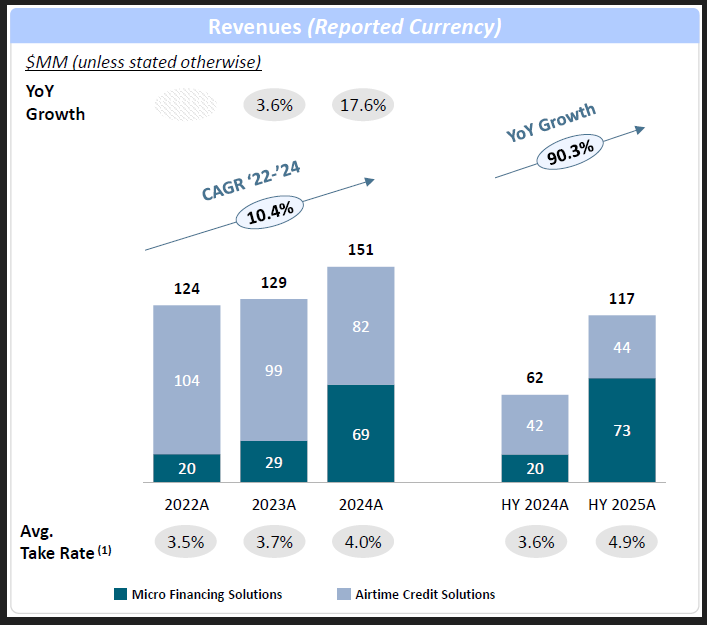
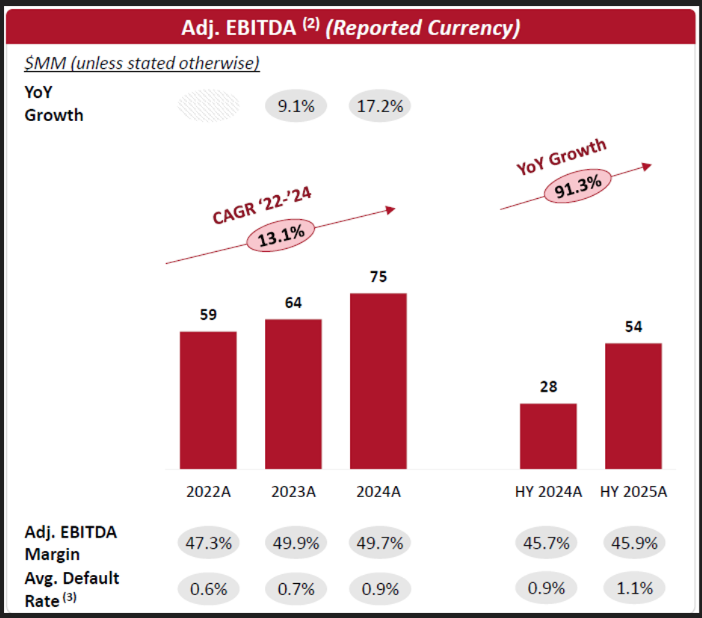
For the year ended December 2024, the company generated USD 151.2 million in revenue. The half year revenue for 2025 is already at USD 117 mn, almost double the amount generated in the half year 2024 results. Adjusted EBITDA increased 91.3% YoY. This growth has been driven by the business’ move towards microfinance. Historically, Optasia granted credit extensions or micro-loans solely for airtime. It has grown into a fuller service offering which allows them to service more needs and generate revenue from a broader source. In 2019, 99% of revenue came from airtime credit solutions; in the 2025 half year results, 62% of revenue came from microfinancing, while 37% was from airtime credit solutions. Due to the nature of the business, the bottom line is potentially a better indicator as EBITDA includes the cost of capital they use to finance loans granted. Net profit for 2024 was USD 36.2 million and margin was 24%. Their capital light model additionally facilitates growth without additional risk to the company’s balance sheet.