

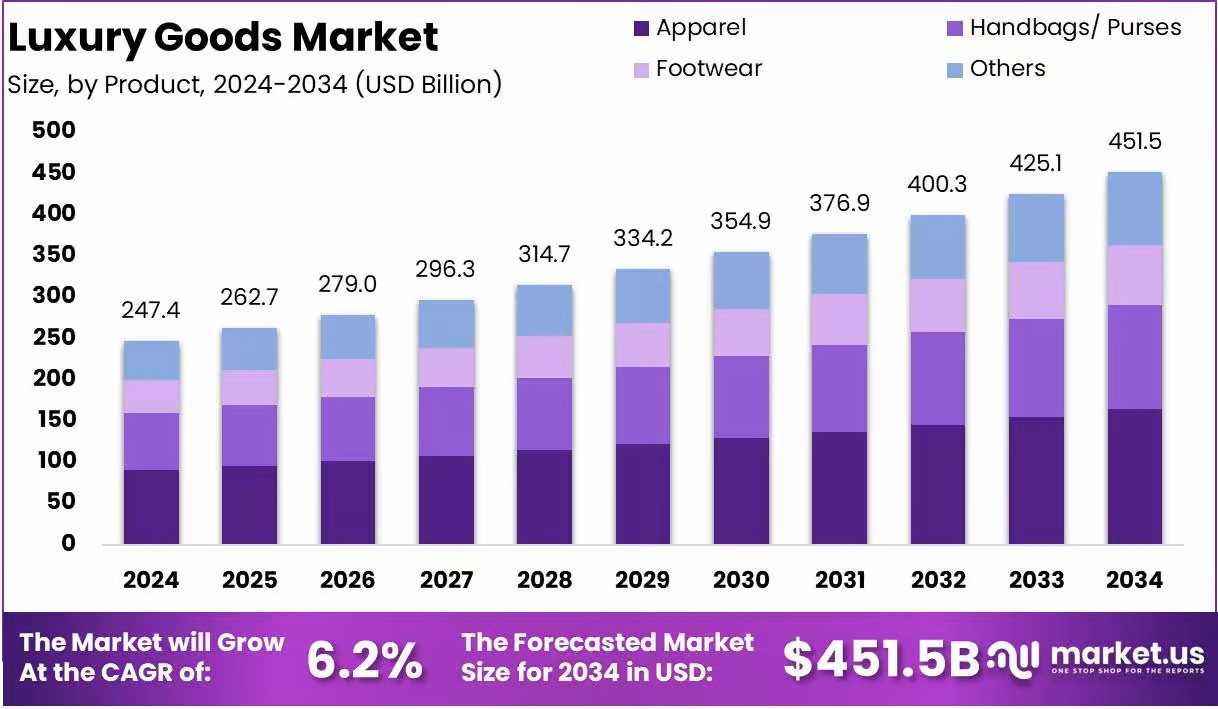
According to Bain & Company, the global personal luxury goods market dipped 2% to €363 billion in 2024, with projections for moderate 0-4% growth in 2025, amid persistent headwinds. This isn’t a signal to abandon the category, rather it’s a signal to become more discerning. The slowdown is distinguishing brands built on enduring fundamentals from those that thrived primarily on cyclical tailwinds. This is separating winners like Hermès (H1 2025 revenue up 8% at constant rates) from laggards like Gucci’s parent company, Kering who’s revenue was down 15%. At a forward P/E of ~40x compared to the luxury goods sector average of around 27x Hermès trades at a premium, but this is justified by its superior recurring operating margin of over 41% and historical revenue growth rate of 19% over the last three years.


The China Conundrum: Bifurcation, Not Breakdown
The narrative of a uniform Chinese slowdown in luxury spending is misleading. The reality is a pronounced market bifurcation. The aspirational consumer driven by logos is pulling back significantly due to economic pressures.
The core high-net-worth segment however, remains robust. As Bain & Company’s luxury study highlights, the top end of the market continues to show resilience, this is the “Veblen goods” effect in action: for the truly wealthy, these purchases are non-discretionary status markers, and demand often remains inelastic in that it doesn’t drop significantly, even if prices rise, as the items’ prestige and exclusivity actually make them more desirable at higher costs.
This has implications for profitability. Brands like Hermès and Richemont’s jewellers who focus on the affluent are inherently more insulated. For conglomerates like LVMH and Kering, the strategy is clear: prioritise protecting margins at their Heritage brands while using entry-level lines as client acquisition tools, even if it means slower growth in that segment.
LVMH’s H1 2025 organic revenue dipped 3%, with profit from recurring operations down 15% to €9 billion, underscoring the need to protect flagships like Louis Vuitton. This bifurcation boosts margins for focused players – Hermès maintained 41%+ operating margins.
The Creative Director Roulette
Beyond macroeconomic pressures, luxury faces another volatile variable: the billion-euro game of creative director musical chairs
In 2025, the luxury sector has been defined by a high-stakes game of musical chairs, where the reshuffling of creative directors directly triggers billion-euro swings in market valuation. These leaders are not just designers, they are drivers of innovation and cultural relevance, accounting for an estimated 20-30% of a brand’s valuation through their control over product and marketing.
The most pivotal move was Kering’s announcement that Demna Gvasalia (commonly referred to as Demna) would transition from Balenciaga to become the creative director of Gucci. The rationale was clear: after a period of slumping sales under previous leadership, Kering made an in-house bet that Demna’s edgy, viral aesthetics could revitalize Gucci and recapture the Gen Z audience.
The market’s verdict was immediate and severe. Upon the March 14th announcement, Kering’s share price plunged 11%, wiping approximately €3 billion from its market cap. The sell-off reflected deep investor scepticism over execution risks and whether Demna’s avant-garde vision could resonate with Gucci’s broader, heritage-focused clientele. This single decision exacerbated existing pressures, as Gucci’s woes had already dragged Kering’s H1 2025 organic revenue down 15%.
This event underscores that, in today’s luxury market, a brand’s creative direction is a significant financial variable, directly impacting valuation and introducing a layer of volatility that investors can no longer ignore.
A Domestic Shift: A Margin Accelerated Story
Pre-pandemic saw a significant portion of Chinese luxury spending within European boutiques. This new paradigm is domestic consumption. While this hurts tourism in Paris and Milan, it’s a powerful margin-accretive story for the brands themselves.
A handbag sold in a brand-owned flagship in Shanghai captures the full retail margin. The same bag sold to a Chinese tourist in Paris often involves a wholesale discount to a department store, diluting the brand’s take. The strategic capital expenditure we see in expanding Chinese retail networks is a direct investment in migrating sales to this higher-margin direct-to-consumer.
However, this domestic focus also forces Western brands to compete on a new and challenging battlefield. A profound risk has been identified through the rise of the “Guochao” (national tide). This refers to the contemporary representation of cultural heritage. This is not just competition for market share, it’s a direct assault on the intangible brand equity that justifies the pricing premium on Western Maisons. If Chinese consumers, particularly the influential Gen Z, begin to see local brands as equally prestigious, it erodes the very foundation of European luxury: its aspirational desire.
Critically, this shift is challenging the long-held prestige of the “Made in Italy” or “Made in France” mark. A growing sense of national pride and sharp improvement in domestic quality are making “Made in China’ a badge of cultural relevance and modernity for a new generation. This forces Western brands to increase defensive spending on selling, general, and administrative (SG&A) expenses on local marketing and collaboration, just to maintain relevance.
The financial imperative is now twofold. The positive leverage from the direct to consumer (DTC) shift must be strong enough to offset the rising costs of defending brand equity. The critical question for investors is whether this increased spending effectively defends pricing power. Can brands continue to enact annual price increases in China without seeing volume erosion? A failure here would signal that the Guochao threat is successfully eroding the fundamental economic moat of European luxury. DTC sales in China now yield 50-60% gross margins vs. 30-40% wholesale. However, if price hikes (averaging 5-7% annually) erode volumes, EBITDA could compress by 2-3 percentage points.
The Geopolitical Overlay: The Tariff Wildcard
Adding another layer of complexity is the cloud of looming tariffs particularly on European imports to the US. For categories like Swiss watches, this presents a painful choice: absorb the cost and crush margins or pass it on to the American consumer and risk demand.
The 15-20% US tariff on European imports (effective April 2025) could shave 1-2% off net incomes for exposed brands like Richemont’s watches, where Q1 growth was 6% (FY2026).
This geopolitical friction only reinforces the strategic imperative for brands to diversify revenue and double down on resilient, domestic focused markets like China, while actively cultivating the next wave of growth in high-potential regions, such as the Middle East and emerging frontiers like India and Brazil.
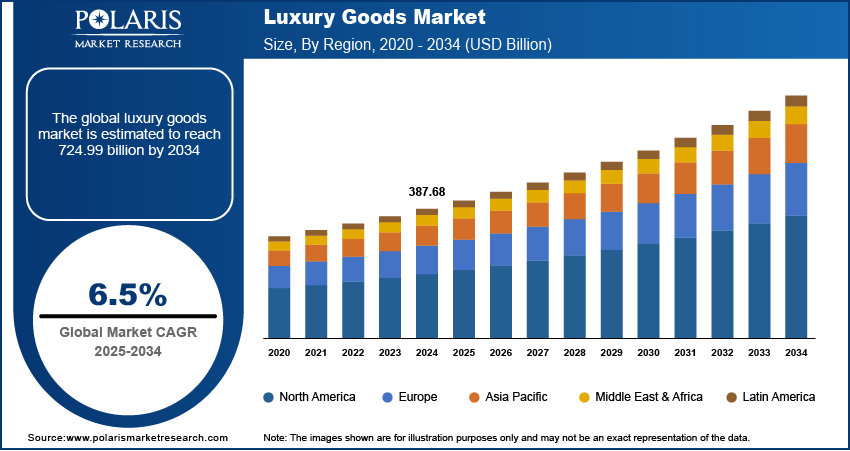
So, is the luxury sector a lost cause? The answer is a resounding no. It is, however, a sector where selectivity is now paramount, the “easy growth” play is over. The new investment thesis hinges in identifying brand with defensive characteristics. Favour stocks like Hermès (defensive moat) over Kering (cyclical exposure). Monitor Q3 earnings for volume trends. With the sector trading at 20-25x forward earnings (below historical 30x), selective buys offer upside as resilience shines through.
|
Brand |
H1/Q1 2025 Revenue Growth (Organic) |
Operating Margin |
Key Insight |
|
Hermès |
8% |
~41% |
Resilient HNWI focus |
|
Richemont |
+6% (Q1 FY2026) |
~21% |
Jewellery strength |
|
LVMH |
-3% |
22.6% |
Portfolio drag |
|
Kering |
-15% |
~13% |
Gucci weakness |